Living That Badminton Mom Life: An Embroidery Review
As a designer who spends as much time behind an embroidery machine as I do at a computer screen, I approach every new graphic with a specific question: will this actually stitch out well? When evaluating Living That Badminton Mom Life, my focus shifts immediately from the digital preview to the physical reality of thread on fabric. This design targets a passionate niche, but for those of us in the Crafts and apparel decoration space, aesthetic appeal must be matched by technical viability. While this product is marketed primarily as a digital download for cutting machines like Cricut and Silhouette, its bold typography and thematic elements make it a compelling candidate for adaptation into a machine embroidery design. However, translating a vector graphic intended for vinyl or sublimation into stitches requires careful consideration of density, stability, and end-use application.
First Impressions and Design Personality
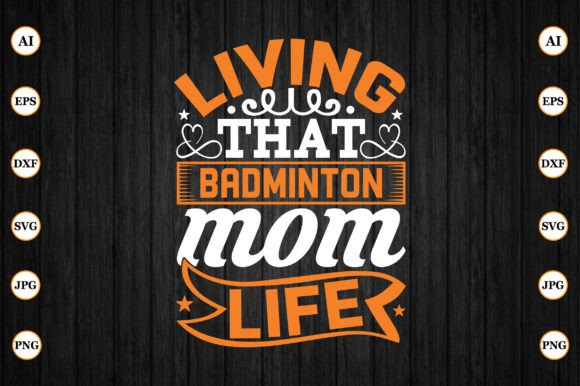
The visual personality of Living That Badminton Mom Life is unapologetically spirited. It captures the chaotic, energetic, and proud essence of sports parenting. From a design perspective, the layout suggests a stacked or badge-style arrangement, which is generally favorable for embroidery because it maximizes hoop space efficiently. The mood is casual yet declarative, making it feel less like a generic stock image and more like a lifestyle statement. For an Etsy seller or small shop product creator, this specific phrasing resonates deeply with buyers looking for relatable, niche-specific gear rather than broad generalizations.
However, because the source files include AI, SVG, and PNG formats at 4500px x 54 (likely a typo in the original listing that should be verified as 4500x5400 or similar high-resolution dimensions), we are working with Graphics meant for print or cut. Before digitizing or purchasing a pre-digitized version, I assess the line weight. If the lettering is too thin, it will require a running stitch that may get lost on textured fabrics. If it is too thick, a satin stitch might become bulky. The ideal scenario for this design is a medium-weight fill stitch or a clean appliqué foundation, allowing the "Badminton Mom" identity to pop without compromising the integrity of the garment.
Real-World Application: The Team Mom Tote Bag
To truly judge the utility of Living That Badminton Mom Life, I mentally place it on a real-world project. Let’s consider a custom canvas tote bag intended for a team mom who carries shuttlecocks, water bottles, and snacks. This is a classic tote bag design use case. Canvas provides a stable base, but it also has a distinct weave that can swallow fine details.
In this scenario, I would avoid tiny serifs or intricate interior cutouts within the letters. Instead, I would utilize the bold shapes of the design to create an applique design. Using a felt or cotton fabric for the appliqué layer reduces overall stitch density, keeping the bag lightweight and flexible while ensuring the text remains legible from a distance. The high-resolution PNG included in the package serves as an excellent template for tracing placement lines. For a personalized gift like this, adding the recipient's name or team year below the main graphic transforms a standard design asset into a cherished keepsake. The key here is scale; on a tote, this design needs to be large enough to command attention but positioned high enough that it isn't obscured when the bag is full.
Navigating Fabric Challenges and Hoop Limitations
Not every substrate is friendly to detailed text-based designs. When planning sweatshirt embroidery or custom apparel using Living That Badminton Mom Life, you must account for fabric stretch and texture. Fleece and french terry are popular choices for sports moms, but their pile can distort lettering. If you attempt this design on a plush sweatshirt without proper preparation, the letters may sink into the fabric, rendering the message illegible.
I strongly recommend using a water-soluble topping and a sturdy cut-away stabilizer to maintain registration. Furthermore, pay close attention to your hoop size. This design likely requires a minimum 5x7 hoop to maintain readable text height. Squeezing it into a 4x4 hoop would necessitate shrinking the lettering below safe embroidery standards, leading to thread breaks and poor coverage. For baby embroidery or smaller items like caps, this specific phrase may simply be too long. In those cases, consider extracting just the word "Badminton" or using the racket icon alone if available, rather than forcing the full phrase into a curved cap brim where distortion is inevitable.
Commercial Viability for Makers and Sellers
For the craft business owner, time is money. A design that requires constant troubleshooting is not profitable. Living That Badminton Mom Life offers strong commercial potential because it targets a recurring seasonal demand. However, professionalism hinges on execution. Before listing any finished product for sale, you must verify the licensing terms. The product description mentions files for Cricut and Silhouette, which often implies personal use or limited commercial rights for physical crafts, but not necessarily for selling the digital embroidery file itself. Always confirm whether you can sell the digitized version or only the physical embroidered goods.
When creating listings, use the included high-res PNG to generate a printable mockup or digital preview, but always pair it with a photo of an actual stitched sample. Customers trust what they can see stitched. Showcasing the design on both light and dark backgrounds demonstrates versatility and helps manage buyer expectations regarding thread colors and contrast. If you offer this as part of a boutique collection, ensure the stitch style matches your brand consistency. Mixing a dense, heavy stitch-out with delicate, airy designs in the same shop can confuse customers about quality standards.
Essential Designer Notes for Success
Before you commit this design to a final project, adhere to these practical checkpoints to ensure professional results:
- Test Stitch First: Never run Living That Badminton Mom Life directly on a sellable item without a test run on scrap fabric of the same weight and texture. Check for gaps between outline and fill stitches.
- Verify Dimensions: The listed 4500px x 54 dimension appears incomplete. Open the SVG or AI file in your software to confirm actual aspect ratio and scalability before digitizing.
- Contrast Check: Test the design in black and white in your software. If the values are too similar, the design will fail on mid-tone fabrics. Adjust underlay or thread selection accordingly.
- Stabilizer Matching: Match stabilizer weight to fabric, not just design size. Stretchy knits need cut-away; woven cottons may suffice with tear-away.
- Detail Inspection: Zoom in to 100% in your embroidery software. Ensure no individual stitch segments are shorter than 1mm, which causes needle breaks and fabric perforation.
- Licensing Confirmation: Explicitly check if the license covers commercial embroidery of finished goods versus digital resale. Do not assume based on file format.
- Mockup Reality: Use the PNG for social media marketing, but photograph real stitches for product pages to build trust with fellow makers and buyers.
Ultimately, Living That Badminton Mom Life is a vibrant addition to the sports parent niche. Whether you are creating a holiday gift for a coach, stocking your Etsy shop with team spirit wear, or making a personalized apron for concession stand duty, success lies in respecting the translation from screen to stitch. By treating this graphic as a blueprint for textile art rather than a simple clip-art insertion, you elevate the perceived value of your work and deliver a product that withstands both the washing machine and the scrutiny of a discerning customer.